My Blog List

My Blog List

Tuesday, 29 December 2015

Is app market a goldmine for Nigerian developers?


For the Communications and Public Relations Manager (West Africa), Google, Taiwo Kola-Ogunlade, there is a mobile application for every activity under the sun.  From mundane things such as learning tips on laundering to exciting ventures in sporting, shopping and travelling, there is a suitable app for every smartphone user.

Indeed, the economy of mobile apps, which is driven by the rising obsession for smartphones, is a huge one. Statistics are contradictory but they all point to a high growth rate in consumption.  

According to eMarketer, a global market analytical platform, Nigeria’s smartphone consumption hits 23.1 million his year. The country, which occupies the 17th position on global ranking, is predicted to reach 34 million users in the next two years precisely in 2018. However, statista.com, another research organisation, puts the current consumption figure at 13.2 million. It predicts that another new 10.1 million subscribers, it predicts, will join the number in four years. That puts the four-year growth rate at about 76 per cent.

Offering an idea on the number of Nigerians that subscribe to smartphones in November, the Nigerian Communications Commission puts the figure of the Internet users at 97.21 million. Expectedly, some of the Internet usage may come from laptop and desktop computers.

But given other statistics, which posits that 95 per cent Nigerians access the Internet on mobile devices, the number of smartphone users, according to the NCC research, is far higher than 23.1 or 13.2 million estimates given by foreign researchers. Understandably, the overseas statistics may have excluded thousands of smart gadget lovers that resort to ‘tokunbo’ market for their choice phones on daily basis.

Though statistics on mobile apps are rare, data on smartphone subscribers can always give a clue. Yusuf Hassan, a UK-based Nigerian developer, puts this in clearer terms. “The higher the number of smartphone penetration in Nigeria the bigger the app industry will undoubtedly become,” Hassan added.

Findings by our correspondent, showed that a mobile phone user consumes between 25 and 100 mobile apps (or more), bringing the average consumption to 62.5. The investigation also revealed that first-time users tend to subscribe to more apps than other older users.

Dele Momodu, a roadside app ‘vendor’, explains this, “First-time users tend to subscribe for higher number of apps because they are not concerned about benefits. They love to see the icons on their phone screens as they flip. Performance of the apps they download is secondary to them.

“But as they grown older in app consumption, they begin to value the utility they derive from a specific app. That is when they begin to uninstall the ones that are not relevant to their day-to-day routines.”

Dominance of foreign tech looms

Unfortunately, the app market is a shadow of its parent telecommunications industry, in terms of its ability to domesticate its commercial gains. With Nigeria inadvertently reducing itself to a consuming nation, local developers have started grumbling – saying market is not yet a money-making venture. More sadly, they are not sure the industry will eventually create visible local impacts as foreign tech companies continue to extend their reach in the local industry.  

The users are here but the app economy is remotely operated and managed abroad. This, experts, say portends great danger for the economy, which they argue is losing in terms of tax revenues, individual earnings, local capacity building and other benefits.  
             
Speaking on the unbalanced development of app business, Hassan, who created Tutlub, an Islamic social app, observes that almost every money earned from mobile app are repatriated to foreign countries who supply the expertise.
               
He says, “The market and its revenue are huge but 99 per cent of the money is still going back to foreign companies. Most of these apps are developed and owned by foreigners. As a result, the revenue ends up in foreign land. This is different from a brick and mortar business, which requires presence in Nigeria. In this business, everything is done online. There is no need for tax, no employment opportunity for Nigerian citizens in Nigeria and no benefits to the economy.
“Mobile app market is part of the overall tech industry. It is the trending part of the industry nowadays; this is because smart phone penetration is not only as a major means of communication but also as a main commerce channel for some companies.

“However, just as it is with any technology trend in Nigeria, they do not bring development per se but also an adopted trend. This creates the problem in management, sustainability and, most especially, lack of infrastructure to support the adoption.

“Using the Internet as an example, many have said that poor infrastructure is holding back broadband penetration in Nigeria. Most Internet users make use of mobile data, which is very expensive. The Internet penetration would have been faster and cheaper if telecommunication industry, in relation to landline, was in good shape and structured before the adoption.
“In relation to app industry, there are different category of apps ranging from retail, travel, social, game, finance to entertainment app and many others. You can see that these categories represent different aspects of our life, some of which are business-related while others are not. This dictates the type of monetisation process that is used in different categories of app.”

But Hassan does not blame the foreign firms that have ‘hijacked’ the supposed wealth-creating industry. He says Nigerian firms lack the requisite government’s support necessary to grow start-ups that can compete both locally and at global stage.

“We cannot totally blame these companies. These tech companies are successful as a result of the supports they are getting from their governments, early stage investors and many other benefits in their countries,” he notes.

Hassan’s explanation is a familiar tale across different sectors of Nigerian economy – industry, agriculture, art/entertainment and just every other profession. Operators complain of poor government’s interest in their contributions to national development.

But like many others have done, some techies have braved the odds and have rolled out iconic brands that are changing how phone users explore their devices. Nonetheless, while the complaints continue – those who have successfully churned out apps say they cannot turn their innovations into commercially viable businesses.

Poor e-payment killing app market

In countries where mobile apps are creating massive start-ups that have become key drivers of the new industrial order, premium apps are downloaded at fees, just as payment is done with the use of debit cards via online.

In Nigeria however, e-payment infrastructure, which drives app purchase in the Europe and America for example, is still at infancy stage to say the least. Many a time, transactions using Nigeria-authorised debit cards are turned down.

iROKOtv, a movie channel developed by Nigerians, took off in the United Kingdom where it also got its start-up funding. The company came to Nigeria subsequently when it realised that its business could do better in the country. But a critical challenge the company faced in the country came from poor online payment system. Those who were willing to download and pay for the Afro-centric app were frustrated by stalled online payment process. Hence, the operator returned to the UK to refocus on Nigerians in the Diaspora 

Hassan says the iROKOtv experience is a major reason Nigerian app owners cannot count on returns from subscription to monetise their products.

“Nigerians are making good apps; and people are willing to buy them. But subscribers cannot use Visa or Mastercard to purchase online. If I put a game online, people may not be able to download and pay because I will use a merchant who may not accept Nigeria-issued debit cards.

“There are cases when people want to purchase but have to route money to me in the UK to help them transact the business because their cards will not be accepted. This a major issue that is affecting Nigerian app developers. They are restricted to other monetisation avenues such as advertising which may not be viable for a start,” Hassan narrates.

Nigerians receive the new Hutlub, according to Hassan, overwhelmingly. But for reasons that are strongly connected with poor e-payment, the developer says selling the app here, which is its biggest market, is not a feasible option.   

“If one wants to distribute apps in Nigeria, one should be in the country to study the payment system; know how it works and look at the possibility of entering into partnership. The challenge is not with the users but access to payment platforms,” he says.

The most successful e-commerce giants in Nigeria are Konga and Jumia. The two firms, unlike what obtains in the Europe and America, adopted payment-on-delivery. Their style, considered as an antithesis of e-commerce, has become a norm.

Initially, new entrants use payment on delivery to build confidence. But why have Jumia or Konga not ditched it for a more convenient mode supposing trust is the only thing at stake? It is obvious that there is more to confidence in paying with cash – perhaps because that is the most workable method of completing online purchase in Nigeria.

With Tellow, one could make virtually all telecommunications enquiries such as data plans, call plans, value-added services, airtime loan and others. Besides Tellow, Royston Yinkore and his other Nigerian colleagues that created the app, they have BT SmartTalk, BT MeetMe, BT Mobile, TrafficButter and Kenyan Traffic to their credit.

The apps they developed – notwithstanding their practical application – could not be described as commercially successful innovations. Yinkore gives an explanation that applies to the entire market.  


Transferred skills from web design not good enough

In an interview with our correspondent, Yinkore says Nigerian app market is still at infancy stage. Lack of requisite skills, the developer says, is a key challenge that is currently chocking Nigerian app market. He says some of the developers are merely transferring web-development skills to app creation, which affects the quality of apps churned out. According to him, most companies look abroad for expertise whenever premium is placed on quality.
            
He says, “It is important to also restate that Nigeria’s mobile apps industry is still in its infancy, and a large proportion of the skill-base is in web design/development. There are a growing number of mobile apps being developed. But the quality of end-products is mostly not of international standard yet. But given that most apps are simple nowadays, this is not so much of a problem. However, when highest quality is demanded, especially for a platform like iOS, businesses often look abroad.

“The market is actually in its infancy. Compared to the rest of the developed world, there have not been many activities on the local app development scene. But there are still a lot of opportunities in the relatively-young Nigerian app development market,” he says.

Like many developers, Yinkore’s references when it comes to successful apps in Nigeria are Jumia and Konga, platforms developed as support tools to sell as apps. One could also argue that Jumia and Konga businesses drove the popularity of the apps and not the other way.

Another app Yinkore refers to as a successful one is Uber, a fully UK-owned platform.

But as for the tech expert, Nigerian youths should focus on the potential of the market to create wealth in the coming years rather than fixating on the current challenges. He points out emerging e-commerce as one of a golden aspect of the telecoms-driven industry.  

He notes, “We can also look at the apps that allow Nigerians to make money by offering services on those platforms. A notable example is the Uber app, which allows Nigerians to make money from providing transportation services via the platform.”

Interestingly, Yinkore says, innovative youths, like their foreign counterparts, are not constrained by physical barriers like in the case of brick-and-mortar businesses.

“The global reach and availability of app stores, namely Google Play and iTunes, give Nigerian app developers access to the rest of the world. For example, the Tellow App is designed to be global in terms of design and usage. So, there are viable global interconnectivity routes,” he avers.

A Lagos-based website designer, Olaolu Ogundeji, also says that local developers have yet to scale the major hurdle to unveiling a successful app. He argues that apps must be able to “disrupt our daily routine of solving tasks” for them to fly, commercially speaking.

“I believe there are viable routes, and one main hurdle Nigerian app developers need to scale through is the big idea behind the app development. Apps developed in Nigeria must be able disrupt our daily routine of solving tasks, while making us function effectively.”

Ogundeji says the biggest app contracts in the country are outsourced to foreign firms. This, he says, limits the potential of local start-ups.

“The main crux is for app developers to create innovative avenues to generate revenue. There are several challenges that an app can help solve – traffic, security and health,” he says.
According to analytics, Jumia is the only indigenous firm in the rank of 20 most downloaded apps in Nigeria. This implies that acceptance of local apps is still low.
While Nigerian experts struggle, apps are creating new millionaires in other parts of the countries.


Originally published in punchng.com

Wednesday, 16 December 2015

Gemade, Akinyemi disagree on zoning system

Prof. Bolaji Akinyemi
A founding member of the Peoples Democratic Party and member of the Senate, Barnabas Gemade, and a former Minister of External Affairs, Prof. Bolaji Akinyemi, on Wednesday, disagreed on zoning system, which the latter said was fuelling political tension among different ethnic groups that make up the country.


Gemade and Akinyemi spoke at the first Distinguished Annual Lecture Series in Honour of Engr. Ette Etteh. The lecture was inaugurated by the Nigerian Institution of Civil Engineers to honour Etteh, the principal partner of Etteh Aro and Partners, who turned 80 years on Wednesday.

The senator said zoning was necessary to given a sense of belonging to minority groups. He said the major ethnic groups would continue to dominate the political system if there was no zoning; hence it was introduced in 1999 by the Peoples Democratic Party.

But Akinyemi, who was the guest speaker, said zoning of political offices had never produced the desired results for the country.  He said zoning was only used by politicians to serve their selfish interests and that it did not reduce the tension in the political system.

The former minister also frowned at multi-party system, saying a two-party model would offer more stability. He said he remained “an undiluted and unrepentant” supporter of a two-party system, a reason he only “practised politics” when Nigeria operated the model.

He said, “Should Nigeria have the free for all political system which we operate? During the first republic, we had three major political parties, with each belong to the three regions. All the other groups were just ancillary parties.

“During the second republic, the pattern was repeated… The putative third republic was the only exception. The military decreed a two party system. There was no northern party, no eastern party and no western party. All of us had to find a room in one party or the other rather than to keep up ethnic party.”  

The professor also called on Nigeria to find a way to express their ethnic identities without undermining other ethnic groups and national unity. He described as false the argument that the creation of Nigeria was artificial, saying diverse ethnic nationalities were cohabiting peacefully before the exercise.

According to him, the country can live as a single entity as it did in the 1960s and 1970s if other multi-ethnic countries like the United Kingdom, France and Austria have been able live above ethnic rivalry.


Etteh who is created for the design of the Tafawa Balewa Square and several other national monuments called on the Federal Government to use the services of local experts in executing public projects. He said no nation developed by relying on foreigners.

Buhari’s critics ‘trend’ #BuhariGate


Before Wednesday, #DasukiGate was the only hashtag used to share their views on the allegedly ongoing arms deal probe.

But #BuhariGate dramatically broke the Internet on Wednesday, causing an online war between anti- and pro-President Muhammadu Buhari on social media. 
  
The source of the hashgag was not known as of press time. But a pro-Buhari social media activist, Japthet Omojuwa, alleged that it was created by supporters of the former National Security Adviser, Sambo Dasuki, to divert attention from the investigation.

“They met in their WhatsApp group and agreed, ‘let us use #BuhariGate to save Dasuki’. You think Twitter is the one prosecuting him?” he asked in a tweet.

The #BuhariGate ‘trenders’ challenged President Muhammadu Buhari to address Nigerians on the allegation that he also benefitted from the looted funds.

According to them, speaking through his media aides did not sufficiently address the concerns of millions of Nigerians who are counting on him for a transparent leadership.

Dasuki had claimed that the sport utility vehicles given to the President after he was attacked by suspected insurgents were bought with part of the money, just as $300,000 cash was given to him from the money.

The President’s media aide, Femi Adesina, had defended the President, saying the SUVs were part of his statutory benefits. He also denied the cash gift allegation.

But critics went on social media on Wednesday demanding further explanation from the President on the issue.

Tweeting on the hashtag, a user, Radical Youthman said, “The greatest hypocrisy by Buhari was to shun the Council of State meetings and clandestinely receive two SUVs from the same state he shunned.”

According to @PaulUtho, another tweeter, the President could not, on account of not receiving cash, exonerate himself from the scandal. The commenter said the SUVs receipt was enough reason he should have personally clarified himself before Nigerians.

But supporters of the President fired back, saying #BuhariGate could not stop the prosecution. They urged thorough and hasty prosecution of the accused persons.

One Ahmed Mustapha fired at those who “collected money to trend” the hashtag. He said they were not working for the good of the country.

#BuhariGate, which led Nigeria Twitter Trends for several hours on Wednesday, recorded over 38,000 activities per hour, according to statistics from Rite Tag, a social media analytic.
         
The South African President, Jacob Zuma, has also, in the past week, battled similar hostile hashtags.  

#ZumaMustFall and several other similar hashtags ones created to draw global attention to the “rot” of Zuma’s administration have ‘flooded’ social media earlier in the week.

In the past week, #ZumaMustFall has received over 65,000 mentions on digital media, said Tospsy.com, an online post tracking tool. The hashtag captures the current mood of thousands of South African social media activists who are not happy with the administration of Zuma.

Meanwhile, the Senate President, Dr. Bukola Saraki, seems to be the first top public figure to adopt #DasukiGate on an online engagement.

Tweeting on Wednesday, he described the “#DasukiGate arms deal probe as an indictment” to the Senate. 

“I want us in this 8th Senate to ensure that committees carry out proper oversight. And those of us in the leadership are going to ensure that we find a way to make sure that committees do their work on oversight because that is the bottom line to this.


“The current investigation going on in the National Security Advisers Office, whether we like it or not, raises valid questions about the oversight function of the National Assembly. We must play our roles in the area of oversight because if we don’t do it, this is what we will get,” he also posted on Facebook.

Thursday, 10 December 2015

Bobo, Olofule, Woju top 2015 YouTube videos


Olamide
This year’s presidential poll was among the biggest event in 2015. On social media, it sparked interest, perhaps, much more than any other singular event experience in the country. Its overwhelming social media impact was confirmed by YouTube on Wednesday when it released this year’s top-watched videos.

The top 10 non-music videos were dominated by issues that are connected with the election, which had ‘set the social media on fire’.

According to YouTube metrics, five out of the top 10 non-music videos of the year are rooted in the poll.

A video of the election result is second on the list, which is led by the South African xenophobic attack. Then, there is a video that narrates how Nigerians feel about tattoo, a new strange culture in the country.

An interview with Aisha Buhari, the wife of President Muhammadu Buhari, comes fourth on the table while an audio record of former President Goodluck Jonathan’s telephone call to congratulate Buhari follows immediately.  

Sixth and seventh positions go to ‘The Innocent Man’ and ‘Lekki Robbery’. Coming behind is a comic video of Jonathan and his wife, Patience, bidding the Aso Rock staff goodbye. 

A video on the shocking confession of a nanny who allegedly kidnapped children of the Orekoyas – a sad event that underscored one of the downsides of online transaction – is eighth on the list.

The category ends with Rev. Fr. Ejike Mbaka’s famous video on why he felt Jonathan did not deserve re-election.

“Street-type interviews are fast becoming a top favourite with Nigerian YouTube viewers, a sign that Nigerians want to be involved in deciding the direction of trending stories.

“Topping the list and holding the much coveted position of most-trended video in Nigeria in 2015 was the street interview on the xenophobic attacks in South Africa. The video which was uploaded in April has been watched more than 650,000 times,” said an official statement from Google.

Olamide’s ‘Bobo’ tops the music category. Other top videos watched in Nigeria are Flavour’s Ololufe, PSquare’s Collabo, Wiz Khalifa’s ‘See You Again’ and Olamide’s Falila Ketan.

Others are Kiss Daniel’s ‘Woju’, Wizkid’s ‘Ojulelgba’, Olamide’s ‘Melo Melo’, Olamide’s ‘Lagos Boys’.

Google’s statement reads, “In the music category, CEO of top music label, Yahoo Boy No Laptop, Olamide has been a clear favourite, with his runaway hits ‘Bobo’, ‘Falila Ketan’, ‘Melo Melo’ and ‘Lagos Boys’ making the list of music videos in Nigeria in 2015.

 “The gravity-defying moves of Psquare put ‘Collabo’ firmly on the list, which is dominated by videos from Nigeria’s music industry, including Flavour and Chidinma’s ‘Ololufe’, ‘Woju remix’ by Kiss Daniel and WizKid’s tribute to ‘Ojuelegba’. Wiz Khalifa is the only foreign artist on the Nigerian list, with ‘See You Again’.”

On the international scene, works by Khalifa, Maroon 5, Ellie Goulding, Major Lazer, DJ Snake, Taylor Swift, David Guetta, Sia and Silento enjoyed massive viewership.   
  

Tuesday, 1 December 2015

5k allowance puts Lai Mohammed on the spot again


Some social media enthusiasts, on Tuesday, moved against the Minister of Information and Culture, Lai Mohammed, who was quoted as saying that the All Progressives Congress did not promise to place unemployed graduates on allowance during the 2015 presidential campaign.

The minister was quoted as saying, “We did not promise N5,000 to unemployed graduates but to vulnerable Nigerians” at an interactive session with members of the civil society organisations held in Abuja on Tuesday.


The statement stirred a fresh controversy on social media, as some youths condemned Mohammed for repeatedly “lying” about promises made by President Muhammadu Buhari and his campaign team during the general elections.

Tuesday was not the first time the former APC’s spokesperson would face a social media backlash over the controversial stipend.  Few months into the administration, he denied the promise during a national television programme, causing an outrage on digital media.
  
Critics confronted him o social media on Tuesday, urging him to politely tell Nigerians that the government could not honour its promise rather reversing it. Some respondents have also raised questions on the difference between “the unemployed” and “the vulnerable”.

On Facebook, one Adegbenjo Adedotun said the minister should have clearly defined what he meant by “the venerable” and how they were different from people who have been in the labour market for five years. He also wondered how the government would identify “the venerable”.

Also commenting on the platform, one Ojeleye Oluwasegun called on the administration to fashion out plan to urgently bring the change it promised Nigerians ratherbeing ticklish.  The subscriber said it was unfortunate that many leaders of the ruling party had decided to remain quiet in the face of controversy over key promises they made during campaign.

Yet, Samuel Barnabas, in a blog, fired at the minister, querying him for being so bothered about the welfare scheme when the government would not spend personal resources on its execution.

“He is talking as if they will fulfill the promise with their personal money,” he posted.
Another blogger wrote, “The truth is that Nigeria is broke, and cannot afford any welfare programme. The minister should have told Nigerians the truth so that the money can be channeled into productive and employment-generating ventures. Then, those who will be employed will take care of the vulnerable.

“Even Saudi Arabia and the United Arab Emirate are reviewing their welfare packages. The government should know that it might not be able to end this once it starts. The madness called subsidy and amnesty handouts might just be a child's play when the unemployment allowance starts. The government should remember that four years is very close. This decision should not add to the APC’s litany of errors and amateurish handling of national issues.”

Meanwhile, an open letter a United States lawyer, Bruce Fein, has purportedly written to President Muhammadu Buhari and posted on huffingtonpost.com on Monday sparked a controversy on Tuesday.


Some Nigerians said the post, which accused the President of being bias in the anti-corruption war, may have been sponsored by some Nigerians who are facing corruption charges.

In the letter, Fein wrote, “To be just, the law must be evenhanded. It cannot, in the manner of Russian President Vladimir Putin, be something that is given to punish your enemies and withheld to favour your friends. If so, the law becomes an instrument of injustice bearing earmarks of the wicked rather than the good.

“In the United States, you declared a policy of ‘zero tolerance’ against corruption. You solicited weapons and other assistance from the United States government based on that avowal. But were you sincere? During your election campaign, you promised widespread amnesty, not zero tolerance…

“After you were inaugurated, however, you disowned your statement and declared you would prosecute past ministers or other officials for corruption or fraud. And, again, you immediately hedged.”

Responding to the post which has received widespread online attention, some social media influencers said the revealed too much detail about Nigerians to have been written by a foreigners.

Wednesday, 21 October 2015

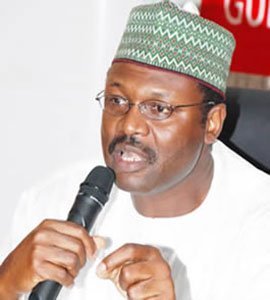
Searching for the new INEC chairman

The new Chairman of the Independent National Electoral Commission, Prof. Mahmood Yakubu, was among the most searched names on the World Wide Web on Wednesday, the day he emerged the organisation’s Ombudsman.

Interest in Yakubu rose sharply at 1pm, according to Google Trends, making him one of the most-researched names by Nigerians as of Wednesday evening.

The new INEC boss, according to Topsy.com, a social media analytics, also received considerably number of mentions on social media. He diverted attention from the Senate President, Dr. Bukola Saraki, whose trial at the Code of Conduct Tribunal had stolen the day earlier.

President Muhammadu Buhari appointed Yakubu, a former Executive Secretary of the Tertiary Education Trust Fund as the INEC helmsman on Wednesday.

But those searching for the former TETFUND executive secretary on popular social media platforms may be in for a fruitless exercise. Reason: Yakubu does not have a page on Twitter – a platform where the commission the professor now oversees commands a huge following.

Besides, as of Wednesday, there was no other social media account one could trace to the former lecturer. Even with his high status in education and political circle, the academic does not have even a parody page linking to him on the Facebook.

On LinkedIn, a site where one finds professionals who may not be comfortable with other social media tools, the historian is also visibly missing in action.

Perhaps, one could safely say that Yakubu has gone the way of Amina Zakari, who was in charge of INEC until Wednesday, and the former helmsman, Prof. Attahiru Jega.

Jega, throughout his tenure, resisted the temptation to join the social media. The same thing applied to Zakari, who is back to her position as an INEC commissioner.

With former heads of INEC who witnessed the social media revolution successfully shunning the temptation to get involved, it looks like there is already an unwritten tradition at the electoral umpire preventing their bosses from keying into the . Well, for Yakubu is up to him to respect the ‘tradition’ or not.

What, however, is beyond Yakubu is how social media will be used to analyse and assess his decisions in coming years.

Meanwhile, his appointment is beginning to attract attention and comments. In fact, online activists have started scrutinising his credential, digging into past media reports on his activities at the TETFUND.

Online reports say Yakubu, the earliest first-class graduate of History from the North, had lectured at the Nigeria Defence Academy before joining the Federal Ministry of Education.

Ezekwesili to Saraki: Don’t privatise the…


 A former Minister of Education, Oby Ezekwesili, on Wednesday, engaged the Senate President in Twitter war for allegedly adjourning the Senate proceedings to enable his colleagues to join him at the Code of Conduct Tribunal hearing.

Saraki is standing trial at the tribunal for alleged inconsistency in his asset declaration when he was the governor of  Kwara State.

Ezekwesili, who accused Saraki of trying to privatise the National Assembly, said what the Senate President did was not exemplary enough.


“Honestly, you should have dissuaded your colleagues from doing such damage to the democratic institution of the National Assembly.

“I speak for citizens who, like me, just simply wish for a transparent judicial due process on your case with the CCT,” she tweeted at @BukolaSaraki.

According to her, the action of the Senate undermines Nigerians’ desire for sustainable institutions.

Responding, Saraki said institutions could only be sustainable if laws were devoid of external interference.

He said it would not augur well for the country to have weak institutions.    

He tweeted, “The sustainability of our institutions is also dependent on the law being devoid of external interference. It will be harmful for our nation if institutions are weakened for personal causes.”

He also told Ezekwesili that due process, which he stood for, was important for the sustainability of the country’s democracy.